Motivation
This AI Assignment Made a Student COUNT DOWN the Minutes to School — Emily's Real Story
August 13, 2026 · Thầy Sulato
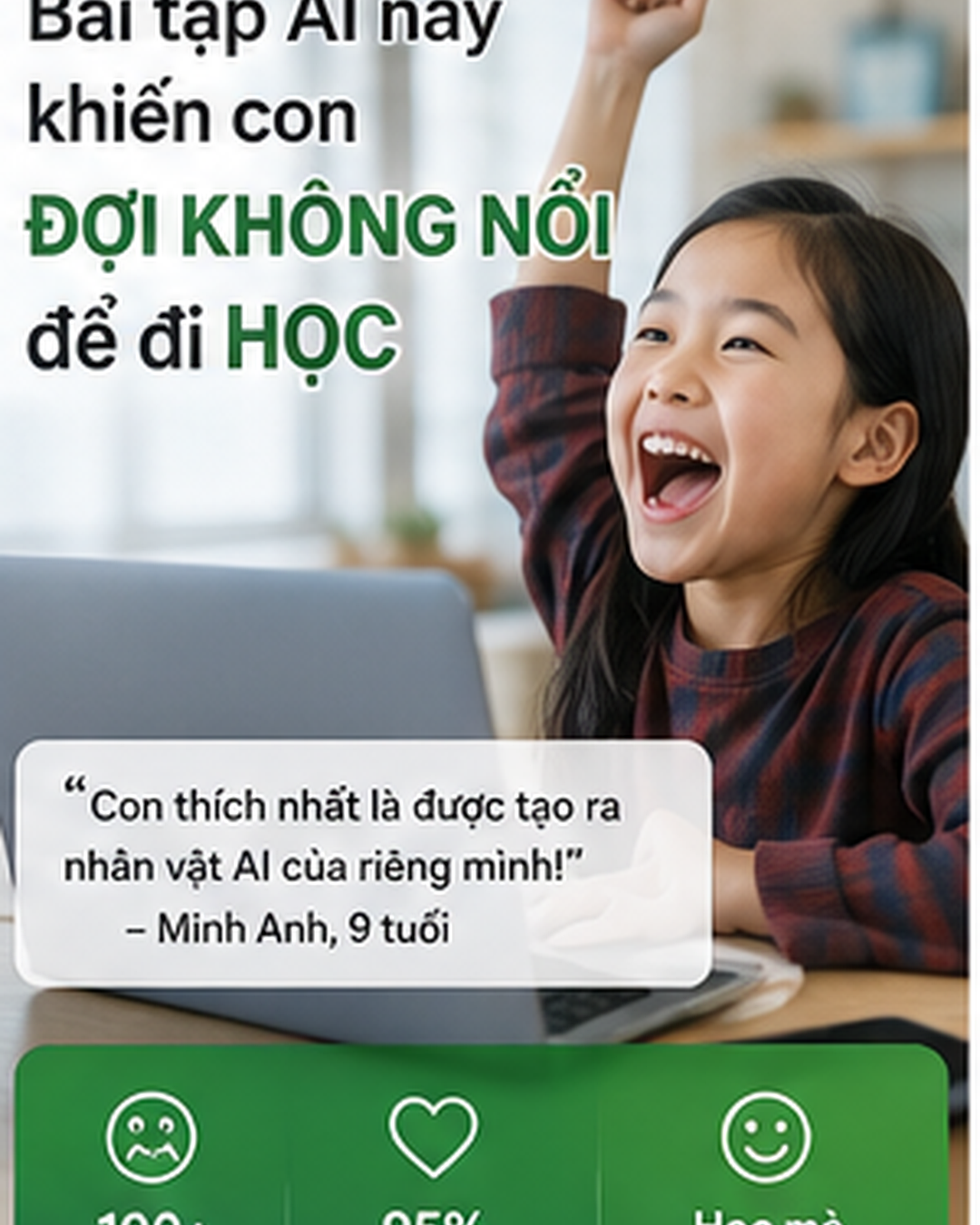
A real purpose + seeing AI as a usable tool + creative freedom = magic results. Emily's math grade went from a D to a B+, but more importantly: she started to genuinely enjoy learning math.
Her name is Emily. She's 11 years old and lives in California.
Last school year, Emily was an "unmotivated" student — she didn't like going to school and complained often. Her math grade dropped from a B to a D.
Emily's teacher tried something different in the spring of 2026.
Instead of a traditional assignment ("Solve problems 1-10"), the teacher gave the class a "Real-World Problem Solving" AI project.
The project: "Use AI to forecast the weather for a farm in your state over the next 30 days, and think about how that forecast could help."
Emily had no idea she was about to change.
The First Few Days: Emily Was Confused
When the teacher assigned the project, Emily was confused.
"I don't know how to use AI. I don't know how to code."
The teacher said: "You don't need to know how to code. You just need to be curious. Ask ChatGPT: 'I want to forecast the weather. Can you help me?'"
Emily tried it. ChatGPT suggested she use public government weather data.
Then something magical happened: Emily started to get curious.
She asked ChatGPT more: "What is weather data? How does it work?"
One question led to the next. Emily didn't even realize she was doing math without it feeling like math.
Week Two: Emily Started Seeing Patterns
Emily discovered "patterns" in the weather data.
"June in California is usually dry, so farmers should water in the morning" — she wrote this note.
No one made her write it down. She did it because she wanted to understand.
This kind of understanding is exactly the critical thinking educators talk about.
Week Three: Emily Started Teaching Others
Emily finished the project, but she didn't want to stop there.
She built a slide presentation with the data, the patterns, and the benefits of AI for farmers.
She presented it to the class. And her presentation was confident, creative, and full of passion.
The Result: 3 Months Later
Emily's math grade went from a D to a B+.
But what mattered more?
In the mornings, Emily's mom no longer had to wake her up. Emily started getting up earlier than usual on her own.
"Mom, we're doing the next AI project today. I can't wait."
A student who once dreaded going to school now couldn't wait to get there.
Why Did This Work?
1. Autonomy (Freedom to Choose)
Instead of "Solve problems 1-10," Emily had the freedom to choose how she wanted to approach the problem. This created a sense of ownership.
2. Mastery
Emily wasn't just doing calculations — she was learning something real. She discovered she could master math by applying it.
3. Purpose
Emily's math wasn't for "a test" — it was to help farmers. She saw that she was solving a real problem.
How Can You Try This With Your Child?
Step 1: Find a Real Problem Your Child Cares About
Not "Solve This Math Problem," but "Solve a Real Problem."
For example: "You love soccer. Let's use AI to analyze which players are 'the most valuable.'"
Step 2: Give Your Child Creative Freedom
Don't tell them to do it "this exact way." Ask: "How do you want to solve this?"
Step 3: Ask Your Child About Purpose
"Why does this matter? Who benefits from this?"
Step 4: Encourage Your Child to Share
Let your child present or write about what they learned. This creates a sense of recognition.
Conclusion: AI Can Transform Learning Motivation
Emily's story isn't an exception — it's a model of what's possible when:
- ✓ An assignment has a real purpose
- ✓ Your child has freedom to think
- ✓ Your child gets to use a modern tool (AI)
- ✓ Your child is recognized for their work
You can create this for your child — starting today.
📚 AI Smart, Kids in Control
4 complete courses, 60 structured lessons — your child learns AI the right way.
View Plans →